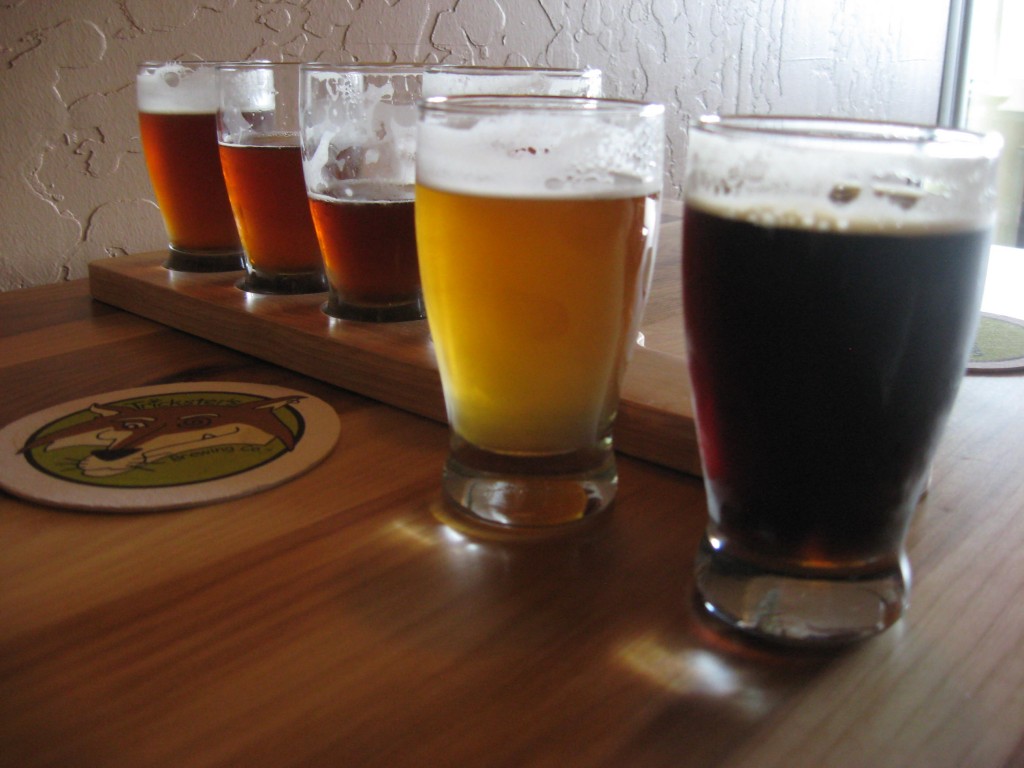
Deep Ellum Brewing: A first look
Written by Paul Higthtower for Examiner.com

 Dallas has never been kind to craft breweries. The last one packed up around 2006 (bonus points if you can name who that was) and Dallas has remained for years the largest Texas city without a home-grown production brewery. But a new place is setting up shop right now down in the Deep Ellum district named none other than Deep Ellum Brewing Company.
Spearheaded by local craft beer enthusiast John Reardon, the enterprise is well under way with shiny new equipment being installed as we speak. Not without some troubles and setbacks recently, Reardon finally acquired industrial space for his microbrewery on the south end of the Deep Ellum district, including room to expand and empty lots nearby for outdoor events.
Deep Ellum has slowly been introducing its brand to Dallas with some local beer-centric events (as well as online), most recently last month at a “Brew-B-Q†featuring catered ‘cue and free samples of beer. With the hiring of head brewer Drew Huerter earlier this year—who brings experience from St. Louis-area production breweries and taprooms, including Schlafly—everything is finally coming together as a real brewery takes shape.
Not Quite a Squirrely BEER Ad
The Reality of BEER
Beer Festival: Florida Panhandle

“Personal Brewery” Produces Beer in Seven Days
A bit pricey and decent beer normally takes more than 7 days: conditioning. Plus regular homebrew gear can be had for a lot less.-PGA
Written by Ben Coxworth for gizmag.com and Popular Science
Ian Williams and and Anders Warn, with the WilliamsWarn beer brewing machine.

Home beer-brewing is sort of like writing a novel – although you might like the idea of having done it, the thought of all the work involved in doing it can be off-putting. If the PR materials are to be believed, however, the WilliamsWarn brewing machine could make the process a lot easier … and quicker. Unlike the four weeks required by most home brewing systems, it can reportedly produce beer in just seven days.
Continue reading ““Personal Brewery” Produces Beer in Seven Days”
MGD 64 Lemonade Dies An Early Death
(The Professor is a little short on taste bud tolerance this century, so he’ll skip this one-PGA)
Written by Chris Morran for consumerist.com

Earlier this year, the MillerCoors marketing machine decided that people really wanted a lemonade version of its successful MGD 64 low-calorie beer. Alas, there must have been a mistake in the algorithm and after only a few months on shelves, the beverage is no more.
“Winning in beer requires testing the bounds of the market with innovation,” MillerCoors president of sales wrote earlier today in an email to MillerCoors distributors. “With that commitment, however, comes a recognition that not every innovation will succeed. That is the case with MGD 64 Lemonade, so we have decided to discontinue this line extension.”
If you happen to like this particular beverage, you’ll want to hit up the store now, as Miller plans to buy back whatever existing retail stock it can. Which makes us wonder what they’re going to do with it when they get it back to Miller HQ.
Joe Sixpack: In the Narrow Category of Worst Beer, a Fresh Contender
Written by Joe Sixpack (Don Russell) for philly.com
 ASK ME THE WORST beer I’ve ever had, and the answer was always easy: Stegmaier Gold Medal.
This was back in the 1970s. The case of 12-ounce cans was smuggled into a dorm room inside a leather suitcase, and we began popping them open before they were sufficiently iced.
It tasted like hay. Or, more accurately, hay that had been cut, baled and then used as bedding for incontinent goats. The rancid flavor lingers to this day and, as I said, it was the worst I’d ever tasted.
Until last week, when I swallowed a mouthful of MGD 64 Lemonade.
Continue reading “Joe Sixpack: In the Narrow Category of Worst Beer, a Fresh Contender”
Monastic Brewing Comes to America

Written by Tom Becham for Professorgoodales
Anyone who spends enough time in pursuit of craft beer will eventually discover the Belgian monastic brews. These seven brewers – six in Belgium, one in the Netherlands – are all Trappist monasteries and make a fairly limited number of beer styles for the purpose of funding the monastery and its works. The breweries/monasteries are: Chimay (the most widely available and commercial of the Trappist beers), Westmalle, Orval, Achel, Rochefort, La Trappe (the Dutch one), and the rare-as-rocking-horse-droppings Westvleteren.
There are many other brewers in Belgium which have monastic connections, and which may use the descriptors of “Abbey Dubbel” or “Abbey Tripel” for their beers.
But to be a genuine monastic brew, the monks must be involved in a certain percentage of the brewing process.
Well, monastic brewing has made its way to the United States. Sierra Nevada, in collaboration with the Cistercian Abbey of New Clairvaux, in Northern California, has introduced a new line of monastic beers. The monks are definitely involved with the brewing process, many of them having been trained by Sierra Nevada. The new line of beers is called Ovila.
Continue reading “Monastic Brewing Comes to America”
Craft Brewers Look Local for Untapped Demand

From AP
Writer NOT Credited
FREDERICK, Md. — Some craft brewers are growing by shrinking.
After years of shipping beer farther and farther away, many small brewers are now shrinking distribution to sell beer more profitably at home.
The strategy reflects the nation’s growing thirst for boutique beers from independent breweries that simply can’t produce enough to meet the demand of a larger market — so they’re putting local customers first.
Want to read more? Please click…
HERE
You must be logged in to post a comment.