Beer Profile: Hoptimus Prime, Ruckus Brewing

Profiled by Ken Carman

I was hoping for an explosive hop pop for the 4th. This one fizzled in two way: taste and I had to shift the publish date.

The man at Midtown Liquors in Nashville told me this was the hoppiest of two new beers. I kind of wish now I’d chosen the other. Oh, I suppose he was right… as far as I know, but Ruckus can do better than this.

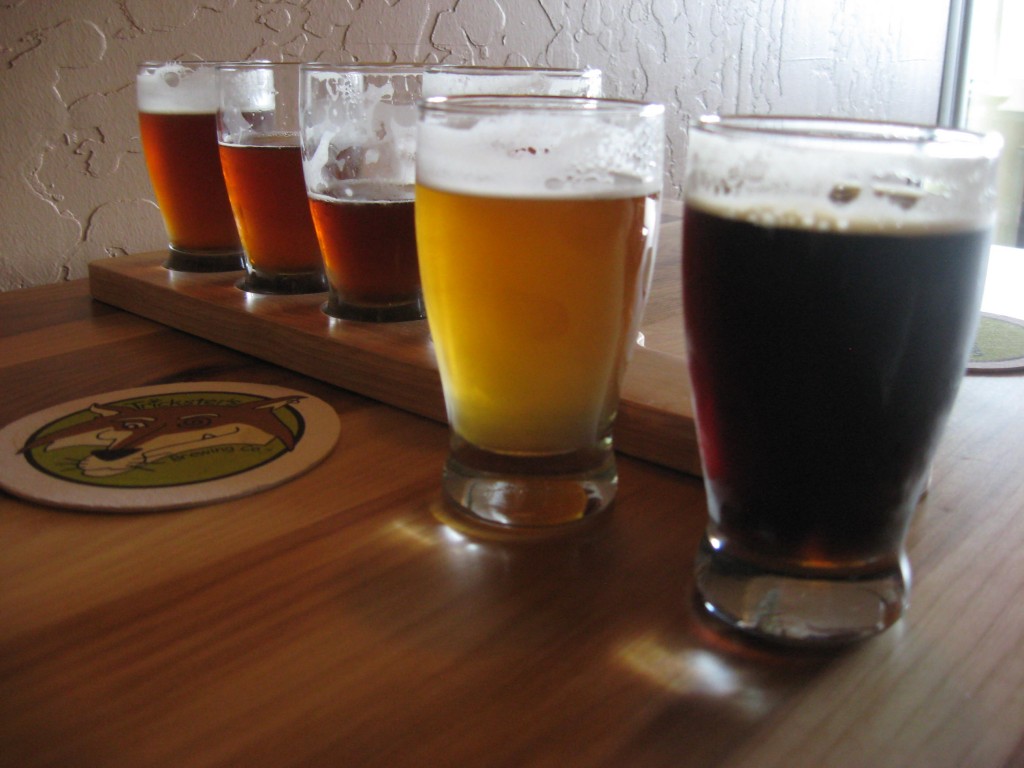
Typical medium gold with nice head and clarity. Mouthfeel is typical bitter cling to the palate and carbonation.

Cascade-ish nose: grapefruit. Not much malt in the nose: almost none and indistinguishable.

Malt about right to the taste for style, but neither hops or malt unique in any sense. I think when Double IPAS were rare this might have done better. The hops are the star by far, but not all that interesting lost in an ocean’s worth of IPAS these days. Mostly bitter. I suspect dry hopping and late additions were lacking in the brew process at this Wilkes-Barre, PA brewery. All that, and maybe a little more complex malt bill, might make this bugger stand out.

Complexity: needs more. That’s the problem.

Start of the U.S. Microbrew Resurgence (Photos)

Note: this collection of pictures is interesting. Only attribution is James Martin for photos and captions. From news.cnet.com

In 1965, when beer connoisseur Fritz Maytag first visited the struggling Anchor Brewery, which was set to close within weeks, he had no idea how to brew beer. But he was almost instantly sold on Anchor’s traditional methods, and the idea of becoming a brewmaster sparked a revival of the Anchor Brewing Company.

Over the next few years, Maytag devoted himself to learning traditional craft brewing from the ground up.

His approach toward brewing, defined by innovation, creativity, and exploration, marked the beginning of the craft-beer revolution.

Between 1965 and 1971, Maytag learned how to brew from scratch, and when Anchor again began selling its Steam beer in 1971, it became recognized as the representative California common beer, a modern handcrafted brew encapsulating the history and culture of the original California immigrants’ brewing processes.

Want to read more and see more Anchor photos? Please click…

HERE

Eagle Rock Brewery to Fight for its Rights Once More

Written by Todd Martens for latimesblogs.latimes.com

In just 18 months, Eagle Rock Brewery has leapt to the forefront of the still-burgeoning Los Angeles craft-beer scene. The home-grown company’s handcrafted beers are now distributed by San Diego’s acclaimed Stone Brewing, and Eagle Rock’s Red Velvet Ale last year brought home a gold medal from Denver’s Great American Brewfest, a trophy that instantly put the tiny operation on the national beer map.

Yet Eagle Rock Brewery might still have a few locals to win over. Despite its quick growth, the brewery could be on the verge of suffering a serious hit to its operations.

Owners on Tuesday will go before City Hall in an effort to prove that the brewery has been in full compliance with its conditional-use permit, the license that allows the company to serve beer in the brewery’s tasting room.

Though the company’s president and brewer Jeremy Raub said he is confident the city will rule in the brewery’s favor, he stressed this hearing should not be taken lightly. “It certainly is paperwork and procedural in nature, but I don’t feel like we can just assume we’ll coast through it,” Raub said. He runs the brewery with his father, Steve.
Continue reading “Eagle Rock Brewery to Fight for its Rights Once More”

How Craft Beer Brewers Hope To Help Towns Hit By Hard Times

Written by Matthew Battles for fastcompany.com

A new initiative aims to find ways for craft breweries to be the business that powers dying industrial towns.
The recession isn’t new to the mill towns of the Northeast; they hit the skids long ago. Decades before the most recent economic collapse, proud, river-encircled cities from Maine to Pennsylvania had faded to mere shadows of the engines of productivity they were during the Industrial Revolution. In place of idle smokestacks and shattered windows, Shoe Town to Brew Town–billed as “a friendly forum over food and drink” to be held at New York’s Brooklyn Brewery–imagines another scene: historic manufacturies throbbing with the yeasty vapors of craft beer, and producing not only brew but sustainably raised fish, hydroponic produce, and enough natural gas to meet their own energy demands.

The project began as a notion hatched in the mind of New York restaurateur Jimmy Carbone. Imagining himself elected mayor of his hometown of Haverhill, Massachusetts, he had a vision of the city’s moribund shoe factories transformed into breweries. A co-creator of the “Good Beer Seal,” which certifies bars that show a commitment to craft brewing and local stewardship, Carbone was aware of the need for resource-intensive breweries to focus on sustainability. Working together, Carbone realized, beer producers, developers, and community groups could churn out a heady brew of opportunity and sustainability. The event, on July 19, gives brewers a chance to come together with activists, architects, and designers to talk about the catalytic potential of craft brewing.
Continue reading “How Craft Beer Brewers Hope To Help Towns Hit By Hard Times”

Tech Talk: Top 10 Steps to Better Beer

Written by Chris Colby for byo.com

Everybody loves his or her first batch of beer. However, after the initial enthusiasm fades, most brewers start looking for ways to improve their beer. And here, beginning homebrewers face a problem. The problem isn’t a lack of information; it’s a surfeit of it. From books to magazines to on-line forums, everyone has an opinion on how to brew better beer. Do you make a yeast starter or try to mimic Burton Upon Trent’s water? Should you keep things clean or build a HERMS machine? Will a little zinc improve your drink? Is avoiding hot side aeration the key to a great libation?

Continue reading “Tech Talk: Top 10 Steps to Better Beer”

Beer Profile: Lucky Bucket IPA

Profiled by Ken Carman

Lucky Bucket Brewing Company
La Vista, Nebraska

We had this on tap a few weeks ago and really enjoyed it. So how’s the bottled version?

Upon first sniff it’s Cascade, perhaps Chinook and very much American IPA to the nose. Grapefruit-like nose? Yes, but a bit more complex than that with malt sneaking in under the grapefruit: there enough for support… and a barely discernible hop mix other than the usual suspects I mentioned. Reminds me of Liberty Ale.

Pours with a nice, thick, pillow head… bit of a chill haze and a nice gold.

Mouthfeel is bitter yet not quite astringent, carbonation gives a firm backbone to a nice body.

Taste: not Liberty Ale. Obviously high alpha hops used early in the boil. Could use more, later, to add complexity to nose and taste. Note: the tap, as I remember it was more complex; better. This IPA didn’t translate as well into a bottled version. Expected, to a certain extent, but this was too much of a contrast. The hops wound up just bitter, the malt faded into little but the adequate support. Almost totally different beer.

Try it on tap, if you can. I don’t mean to dis the bottled version. Tis enjoyable, but can be so much more.

Now I’ll go back to dreaming of Lucky Bucket on tap. Could we also do a nitro push, or hand pulled?

Yum.

Flags and beer: A Baltimore tradition

The kindness of a Baltimore brewer plays a small part in the story of America’s national anthem

Written by Rob Kasper for The Baltimore Sun

During the Fourth of July weekend in Baltimore, there will be plenty of flags flying and beers sipped. This connection between the American flag and Baltimore beer goes back almost 200 years and played a small but interesting role in history.

During the War of 1812, seamstress Mary Pickersgill was hard at work on the large American flag that would eventually fly over Fort McHenry and inspire Francis Scott Key to write the poem that would become The Star Spangled Banner. In the summer of 1814, Washington had just been burned, and the British were turning their attention to Baltimore, then the third largest port in America and home to privateers, a nemesis of the British Navy.

The story goes that Colonel George Armistead, who was preparing the defense of the fort, felt that the only thing still needed was “a flag so large that the British should have no difficulty seeing it from a distance.” Mrs. Pickersgill got the job because she was an accomplished seamstress, having learned the flag making trade in Philadelphia from her mother, Rebecca Young. She also had family connections. She was related by marriage to Commodore Joshua Barney and General John Stricker, two of the men in charge of the defense of Baltimore.

She fashioned two flags, a massive 30 foot by 42 foot flag with stars that measured two feet point to point, and a smaller 17 foot by 25 foot flag called a storm flag. In bad weather the larger flag, soaked with moisture, could be too difficult to hoist, so the smaller storm flag could be substituted.

Assembling these large flags required a lot of room, which Pickersgill’s house on Queen Street, now called Pratt Street, did not have. She, however, was on good terms with a neighbor, George I. Brown, who has just bought a brewery at Lombard Street and the Jones Falls.

Continue reading “Flags and beer: A Baltimore tradition”

Brewfest on Tap

Even though you may not live in the New England area, this article also has the interesting story of of a brewer who brewed a Pilgrim beer and his venture into professional brewing.-PGA

Written by Beth I. Gandelman for newburyportnews.com

AMESBURY— A competition for best home brew and the soft launch of Riverwalk Brewing will highlight today’s annual Amesbrewery Days Invitational Craft Brewfest.

Participants will have the opportunity to sample the craft beer creations of more than 20 artisan brewers and vote from two finalists for their favorite IPA beer during the event, which goes from 5 to 8 p.m. in the Amesbury Town Hall parking lot on Friend Street.

Sponsored by Heat Event Management of Amesbury, the festival is geared toward the smaller, lesser-known brewers who put quality above quantity and have passion, a unique message and a stake in the art of beer-making.

Among them will be Amesbury’s Steve Sanderson, winner of the History Channel’s “History on Tap” brewer competition last year.
Continue reading “Brewfest on Tap”