American craft beer from the Brit perspective- The Prof

From tasteless mass-produced beers a decade ago, innovative, flavoursome American ales from a thriving craft brewing scene can now be found in the UK. Is this a welcome invasion?
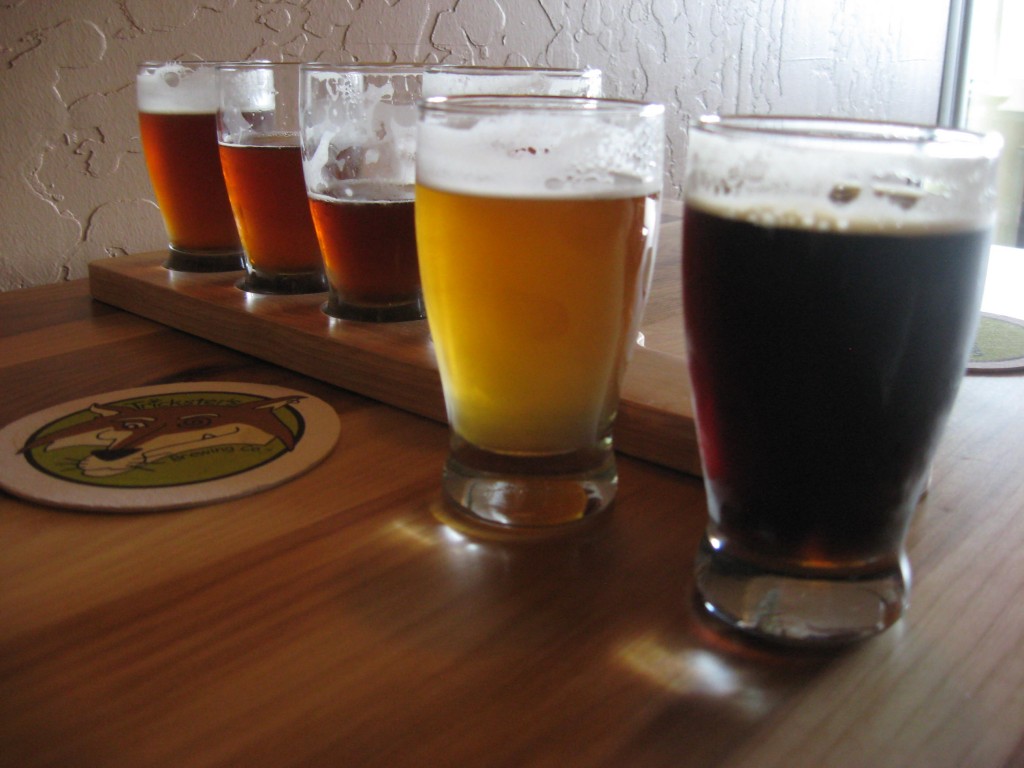
If you have ever drunk Budweiser, Michelob or Miller Lite, the phrase, craft brewed American beer, may sound like an oxymoron. A joke, even. But, for several years now, it is US microbreweries which have been setting the pace internationally, exciting beer geeks and inspiring several radical new British breweries.
If, however, that Stateside creativity was previously an open secret, mainly of interest to a small beer-drinking cognoscenti, all that is about to change. Thanks to the advocacy of new wave specialist beer bars like Manchester’s Port Street Beer House, Bradford’s Sparrow, Leeds’ North bar, London’s Rake, the Draft House venues, the Euston Tap, and Brewdog’s small chain of Scottish bars, US craft beer is suddenly gathering a significant momentum in the UK. Previously obscure beers from Flying Dog, AleSmith, Stone, Odell and other small US breweries are gaining exposure here, among discerning drinkers, like never before.

Which, if you are looking for excitement in your glass, is reason to celebrate. In sharp contrast to their often conservative UK counterparts, America’s 1,600 microbreweries specialise in big, bold, punchy flavours. Their beers are typically dosed with huge quantities of hops – both hops high in alpha acids, early in the brewing process, for bitterness; then dry, uncooked hops later on for fruitier flavours – in order to cram taste into their beers. As Steve Taylor co-owner of London bar, Mason & Taylor explains:
“Over the last 30 years or so, American agricultural universities and hop farms developed a multitude of new hop strains, like Amarillo, Cascade and Citra, most of which have bold aggressive bitterness and huge, fresh, largely tropical flavours. Those hops inspired a pale ale revolution which elevated US beers beyond the unremarkable brown session beers which had previously, and to a certain extent still, dominate English cask beer production.”
First and foremost, British beer drinkers are responding positively to the exuberant flavours characteristic of US craft beers. That those beers are slickly packaged, however – not just in terms of memorable or modish branding, but in the way the labels tend to clearly explain how said beer was made and how it might taste – is an important factor, too.
Continue reading “American Craft Beer: the Hippest of Hops”
 DAYTON, Ohio (AP) – Beer buffs say the state will miss out on sales and potential tax revenue because a proposal to let Ohioans buy higher-alcohol beers was dropped from the state budget.
 As someone with a weekly drink column who’s always in quest of the next great sip, variety in my glass is just a way of life. In the past decade, I’ve almost never ordered the same bottle twice. The notion of having an entire keg of one beer to consume in my home, then, has always been the ultimate nonstarter every time I thought about tackling home brew.
 Taste: grapefruit sour which also dominates the mouthfeel. Lime might also describe the sour sense. Light but adequate body. Mostly pilsner malt?
 I am fortunate to have been introduced to craft beer early in my life. Shortly after I turned 21, the beers I kept at home were from breweries like Sam Adams, Sierra Nevada, Pete’s Brewing Co., and anything imported. I even tried homebrewing a few times. Mom wasn’t happy when the first attempt ended up on the kitchen floor. Fast forward to my investment consulting years in San Francisco; my favorites were beers by Moylan’s Brewery, Marin Brewing Co., Thirsty Bear Brewing Co., and the other East Bay greats.


You must be logged in to post a comment.