5,000-year-old brewery, possibly world’s oldest, uncovered in Egypt Social Sharing


American and Egyptian archaeologists have unearthed what could be the oldest known beer factory at one of the most prominent archaeological sites of ancient Egypt, according to a top antiquities official.

Mostafa Waziri, secretary general of the Supreme Council of Antiquities, said the factory was found in Abydos, an ancient burial ground located in the desert west of the Nile River, over 450 kilometres south of Cairo.

He said the factory apparently dates back to the region of King Narmer, who is widely known for his unification of ancient Egypt at the beginning of the First Dynastic Period (3150 BC- 2613 BC).

Archaeologists found eight huge units — each is 20 metres (about 65 feet) long and 2.5 metres (about eight feet) wide. Each unit includes some 40 pottery basins in two rows, which had been used to heat up a mixture of grains and water to produce beer, Waziri said.

Want to read more? Please click… HERE!!!

From the Bottle Collection: Daleside’s Monkey Wrench Dark Ale


 Without intent, I have collected well over 1,000 beer bottles since the early 70s. When something finally had to be done about the cheap paneling in this old modular, I had a choice: tear down the walls while, oh, so carefully, replacing the often rotted 1X3s; OR, cover them with…

The Bottle Collection

 Have you had this? The bottle I have is pretty old and I haven’t seen this for a while. But I haven’t been looking. Listed as a Strong Dark Ale it gets a 3.5 on untappd, 85 on BA, 48 and 52 on RB (3.23 out of 5). Though claimed to be strong it is a mere 5.3 abv.
 The site asked if I was at least 18. Drinking age must be a8 in England; as it used to be here. Continue reading “From the Bottle Collection: Daleside’s Monkey Wrench Dark Ale”

Beyond ‘Roasty’: The Surprising Psychology of Stout

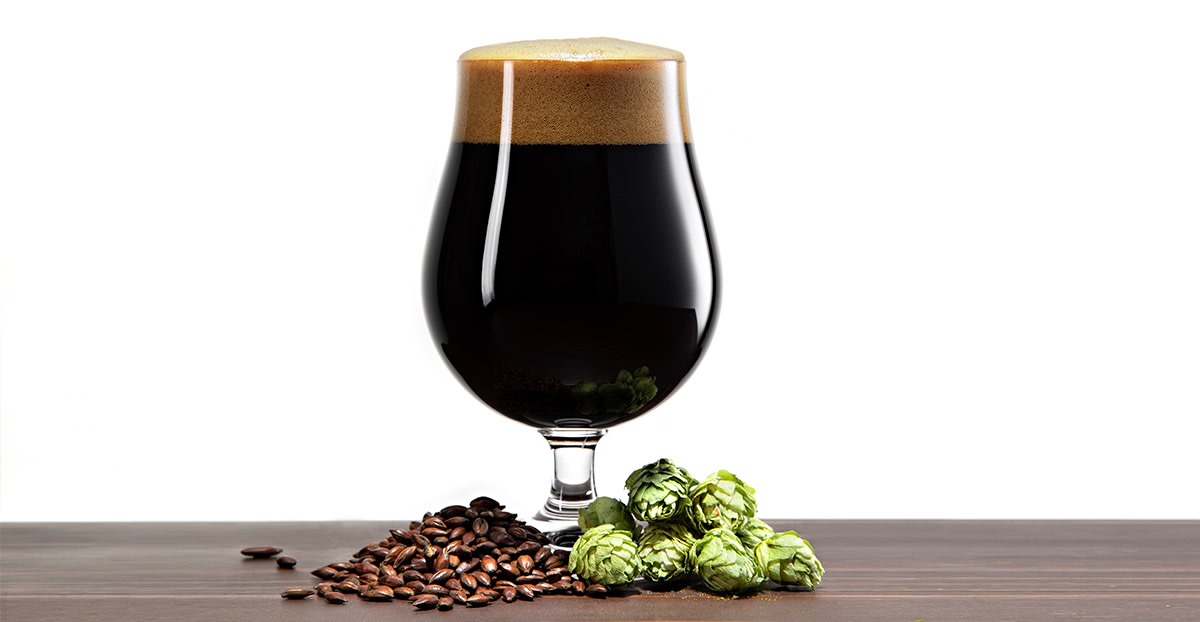
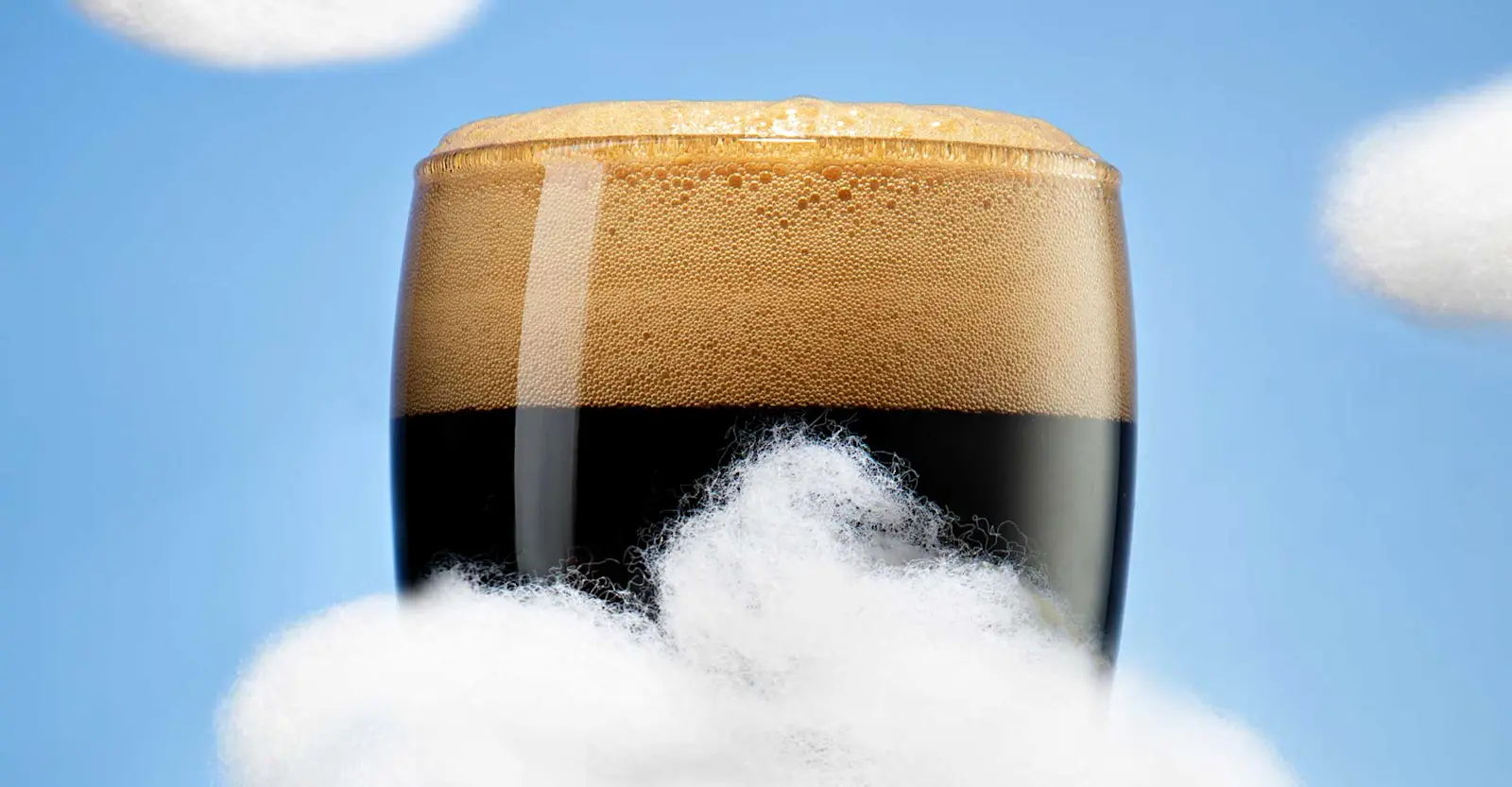
Rich, dark, deeply flavored, and sometimes beastly, stouts are a style that people don’t like—they love. Or hate. There’s no “meh” in stout-land. The near-universal rap from the haters is that they’re “heavy,” or strong, or filling, and occasionally they are. But one of the world’s most popular stouts isn’t even as strong, or rich, or filling as your average mass-market lager—it’s as light on its feet as a ballerina—and you can dance with her all night long.

Whether we’re a drinker or a brewer, our misperceptions revolve around our psychology—especially the way our brains integrate our senses and bring them to our consciousness. As tasters, we like to think we’re pulling apart the various threads of taste, aroma, mouthfeel, and that elusive synthetic construct called flavor. But that’s not how we’re built. Shaped by billions of years of evolution, our chemical senses are gloriously effective at translating the outside world into an action plan. The results of this unconscious sensory integration are notions that are strongly motivating, either attractive or repulsive. Analysis takes too much time in the heat of the moment; we’re not all that good at it anyway.

Our every sensory experience is shaped not just by the sensations of the moment but by a lifetime of expectations and experiences that set the framework for what is delivered to our window of consciousness. We rarely have access to the raw data. We struggle to focus on the parts when our mind really wants to give us the bottom line.

Colors, Names, and Other Lies

Want to read more? Please click… HERE!!!
The Perfect Crush

My summer crush began in the warmest months of 2017, shortly after quitting my corporate job to work full-time for MoreBeer! I know, most love stories don’t start with a change of occupation. Then again, this isn’t a love story, unless of course you count the love to learn more about brewing. Before signing on full-time, I had been working weekends at my local homebrew shop and a frequently asked question was, “What is the ideal gap setting for my grain mill?” On the surface it seems to be an easy, straightforward question with a simple answer.

Want to read more? Please click… HERE!!!

Whatever Happened to American Stout?


Looking at trends, you could get a very confused perspective on what the American drinker wants. On the one hand, IPA—whether aggressive and bitter or fruity and smooth—still rules the roost. On the other hand, aficionados wrap the blocks for the latest big, burly, rich sweet stout that tastes of bourbon, vanilla, and a Boston cream donut. So, you might think that we, as a group, would appreciate a rich, roasty pint with an aggressive slap of hops.

At one time, we did. What happened to us, and what can we do to restore the proud tradition of the American stout—while still being playful?

Early American brewing had its share of porters and stouts before lagers began to dominate the market, pushing out all but a few old stalwarts. I’m not talking about those. I’m talking about craft American stout.

The Roots…

Want to read more? Please click… HERE!!!

WEIHENSTEPHAN: ON THE CUTTING EDGE OF BREWING AT THE WORLD’S OLDEST BREWERY

Written by Franz Hofer for A Tempest in a Tankard

Weihenstephan is a brewing institution steeped in superlatives. The very name of this venerable old brewery north of Munich evokes associations with some of the most respected wheat beers in the world, beers like the style-defining Hefe-Weissbier, and Vitus, a lush Weizenbock. And not only is Weihenstephan home to one of the most famous brewing schools in the world, it’s also the world’s oldest existing brewery.

A MONASTERY BREWERY OVERLOOKING FREISING

Want to read more? Please click… HERE!!!

Water, Water Everywhere


While Drew is getting his ducks in a row for the next series of shows – It’s Replay time! And since we’ve been getting a lot of water questions, what better place to revist, than Martin’s episode all about Bru’n water!

The Brew is Out There! TECHNIQUE SHOW

Want to read more? Please click… HERE!!!

Beer Nut: Enough with New England IPAs


If you’ve been reading this column regularly over the past 17 years, you’ll probably have noticed that one thing I rarely do is write negatively about anything.

I don’t really review beers, and if I do in any way, I only do so if I enjoy them. This is because tastes are subjective and what I may find displeasing might be really tasty to someone else. It’s like any creative endeavor: I may love a certain book or film or song, and you may hate it. It’s just the way it is with anything that isn’t based on empirical data. (A certified beer, for example, can tell you if a beer is well-made according to the style it’s in, but their opinions mean nothing when it comes you whether you should like it or not.)

Want to read more? Please click… HERE!!!

Comparison: 2016, 2019 and 2020 Dogfish 120

By Ken Carman
 I thought of doing this as a beer profile, but I think the nuances would be lost. Comparing years on any beer is a special form of analysis. I used to think of 120 as an overly hoppy, somewhat barley wine-ish brew. I was skeptical when they claimed it ages well. I decided to test that. I am VERY happy to report I was wrong… sort of.
 Before I even tasted them, smelled them, savored them, I added this caveat: I find hops tend not to age well when they become the focus. A little cardboard is one thing among the sweet, flavor-filled, well aged Bigfoot or Foghorn. I find it adds texture, a pleasantness. But when hops are THE balance factor, unless you’re brewing one of those Belgian brews that use specific type of hops that age well, uh, no. I have done assessments of up to 10 different years of Sierra Nevada Bigfoot. Thomas Hardy too. I have an almost 20 year bottle of Hardy Big Bob gave me from Big Bob’s Barleywine Bash just before he died. Some day we’ll savor it. Almost hate to: once it’s gone that’s it. Like Big Bob dying all over again.
 So let’s see how aged 120’s stack up. BARELY aged. Not sure I’d want a 20 year 120 due to hops, but I’d be open to the experience. My original plan was to have 3, but Midtown in Nashville stocked them wrong. They had them labeled as 17, 18 and 20. I ended up with 2 2020’s and one 2016. But 2 days later found a 2019. So 16 v. 19 v. 20.
 The comparison was, well, educational. We’ll start with mutual characteristics, then move on to 2020, and from there go back in time.
 No fermentation characteristics in any of them. Two of them have a dry, yet slightly sweet, sense to them. Makes for an interesting balance, enticing. One? Well, we’ll get to that. I do have a question: does Dogfish vary they recipe for 120? That might explain the 2019.
 Let’s see what 1 year, then 4 years, does to 120. Continue reading “Comparison: 2016, 2019 and 2020 Dogfish 120”