(Note: when used in beer, pumpkin is considered a vegetable; entered in Category 21: spice/herb/vegetable-PGA)
You can brew beer with just about anything and as the craft beer movement progresses we will see more and more foodstuffs dropped into the fermentation tank to put a new spin on beer. Fruit in beer is nothing new but…..
You can brew beer with just about anything and as the craft beer movement progresses we will see more and more foodstuffs dropped into the fermentation tank to put a new spin on beer. Fruit in beer is nothing new but the skill with which it is being used is reaching a pretty nice level. I thought the warm weather was gone for good and we had moved solidly into fall…apparently not. So in the hopes that the cool weather returns I picked a pumpkin beer to review. Being the realist I am I know that the warmth could stick around for a bit longer so I also chose a nice tart cherry ale as well. Continue reading “Fruit Beers for the Season”
This article tries to be yet another one that explains the concept of residual alkalinity and mash pH. For many all grain brewers this subject is the last frontier. For others, especially the ones cursed with very alkaline water, it is essential for brewing a wide range of styles.
I’m happy to be back with another great Q&A for the month. This week I got the chance to spend some time with Caleb Staton of Upland Brewing Company in Indiana. Last weekend they won Gold at GABF for their “Sour Reserve Geuzeâ€, which I’m jealous of those who got to taste it! So on to the interview!
When beer goes bad. Image courtesy variousmiseries.blogspot.comThis time of year, I spend a week in Denver, attending the country’s biggest beer festival: the Great American Beer Festival, or GABF. For a number of years, I’ve also been privileged to be one of the judges who help determine which beers will win gold, silver and bronze medals in 84 categories. This year was a record year, with more than 4,420 beers from 673 breweries in 48 of the 50 states, plus Washington, D.C., and Guam.
For three days, 184 of my fellow judges and I hunker down in the basement of the hotel where the judging takes place. Our ultimate goal is to find the best of American brewing. One of the ways we accomplish this is to eliminate beers that we think are not as good as others, that have flaws we don’t find in others.
These may not even be the 10 most common defects because, as far as I know, no one has ever ranked beer defects by how often they occur. The 10 I chose are the flaws you’re likely to encounter if you drink your fair share of beer. For each one, I’ve given its common descriptor, the scientific name brewers use and its likely cause or causes.
It’s possible that you have tasted one of these defects in a beer you’ve enjoyed and didn’t realize it wasn’t supposed to be there. For some defects, it’s considered a flaw only if it’s too pronounced. At low levels, it may be perfectly acceptable — even desirable. Or it may be that you noticed one of these off-flavors but didn’t know its cause. Some causes are quite complicated, so I’ve tried to simplify them as best I could. Hopefully, this will give you a better sense of some of the more unusual flavors you sometimes find in a beer but wished you didn’t.
The defects
Band-Aid (chlorophenol): You just know something is out of whack when your beer smells of adhesive bandages. This aroma also may remind you of disinfectant or diaper aromas. It’s the artificial quality that really stands out in this defect, which usually is caused by a problem with sanitizers or yeast.
Butter or butterscotch (diacetyl): Think of that artificial butter aroma and flavor from movie-theater popcorn, and you’ve got the diacetyl character in some beers. At low levels, this can be an enjoyable flavor component. But just like popcorn that’s swimming in butter, too much can make for an unpleasant experience. Beers with too much diacetyl often are called “butter bombs,” and the cause is often a problem with the yeast and amino acids. Continue reading “Brooks on Beer: The 10 Most Common Beer Defects”
Imagine a hot summer day, sitting in the cheap seats at your favorite baseball park. You have your hot dog, your giant foam finger, and a beer. Does life get any better than this? Can scientists build a better beer?
What happens at the Great American Beer Festival (GABF) says a lot about what’s to come for the beer industry. Who won what, what styles emerged as favorites – they all give craft beer fans a glimpse of their future refrigerator shelves.
So what happened at this years GABF? What does it all mean moving forward? Sadly, I can’t see into the future, but here are some of my takes from this year’s event.
1. Unfortunately, New Jersey had a poor showing. Only four local breweries made the trip out to Denver this year. Harvest Moon brought its Citra Double IPA and Sinterklaas Belgian Winter Ale; Iron Hill showcased Pinelands Pils and The Cannibal; J.J. Bittings featured Bad Boy Octoberfest, Dunkel Weiss, Knockout Bock, OnyXXX Stout, and Victoria’s Golden Ale; and Flying Fish showed off Abbey Dubbel, Exit 16, Exit 4, HopFish IPA, and won bronze in the Specialty Beer category with Exit 8.
I don’t think this accurately represents New Jersey craft beer, though. Some of New Jersey’s best are small, and can’t yet afford to make the long and expensive trip out to Denver. Had Carton, Kane, New Jersey Beer Co., Boaks, Cricket Hill, River Horse, and the others made it out, I think Jersey would have come home with a few more medals. That being said, it’s definitely an uphill battle if we want to compete with California, Colorado, Oregon, and the other states that dominate the craft beer industry. Continue reading “On Tap: Five things to take away from the 2012 GABF”
Over 6000 people came to this year’s Grovetoberfest, the craft beer festival held in Peacock Park in Coconut Grove. The festival this year, was held Saturday, October 13, where over 200 craft beers including several new releases were served to the thirsty crowd. Continue reading “Best Craft Beers Chosen at Grovetoberfest”
Without intent, I have collected well over 1,000 beer bottles since the early 70s. When something finally had to be done about the cheap paneling in this old modular, I had a choice. Tear down the walls while, oh, so carefully, replacing the often rotted 1X3s. Or: cover them with… The Bottle Collection.
Written by Ken Carman
I haven’t seen this in the stores for about 5 years, but to be honest: I don’t go looking for it. That’s not necessarily a neg comment, more “not my style.” I remember it as a typical English pale of the lighter variety, essential Brit version of a lager like Bud only with an ale yeast. Preferable, but not my style. Copper with a hint of orange. I remember a light palate to the mouthfeel with a faint hint of malt. Low carb: to be expected. Hops low. Not much of a nose: faint malt and hop sense with fruity background, too long ago to liken it to anything. Clarity was good, rocky head, if I remember right.
Looking over comments at Beer Advocates I’m wondering if, like the beer they describe, my memory might be a tad hazy. OR, maybe I had an old bottle where some of the nuttiness/caramel character faded? I really didn’t notice hops, I do remember that, which I’m guessing is a good sign it may have been an old bottle. I did note that those who had had it on tap in England had a far better experience.
If you are expecting a typical lighter pale ale that you might get in England: have at it. Not me. I’m too deep into aggressive to buy it again, unless I’m trying to impress a Brit visitor, or not offend anyone.
Brewed by O’Hanlon’s Brewing Co. Ltd./Great Barton Farm, Clyst St. Lawrence, in England. Near Exeter and Honiton.
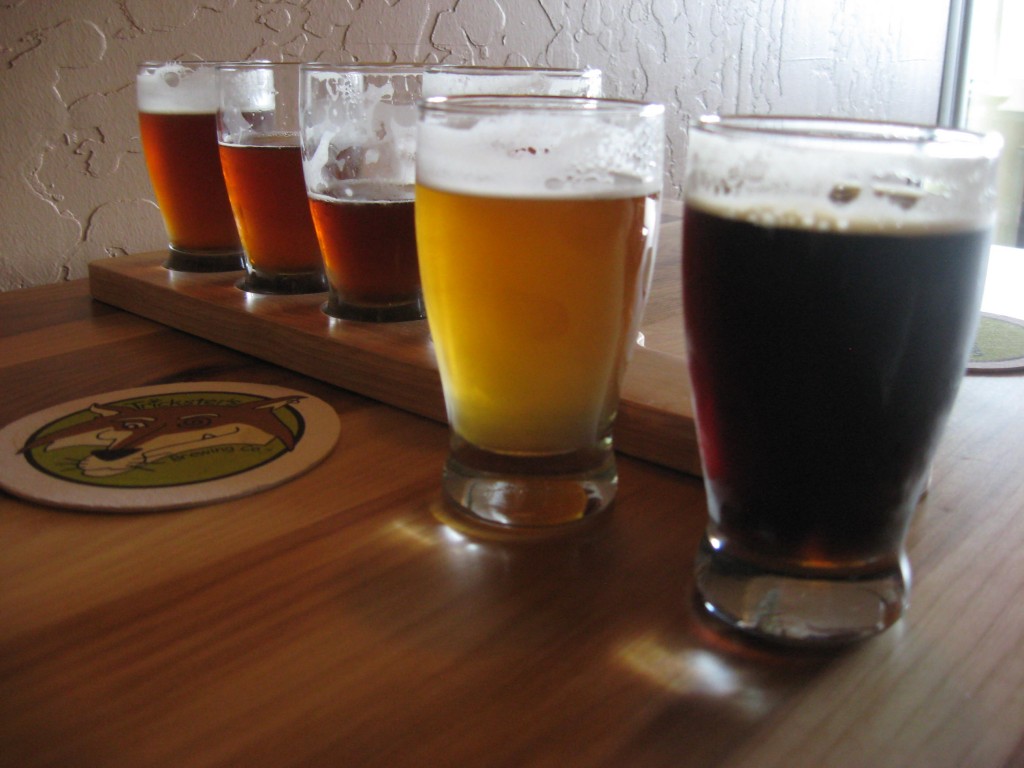


 What happens at the Great American Beer Festival (GABF) says a lot about what’s to come for the beer industry. Who won what, what styles emerged as favorites – they all give craft beer fans a glimpse of their future refrigerator shelves.

 I haven’t seen this in the stores for about 5 years, but to be honest: I don’t go looking for it. That’s not necessarily a neg comment, more “not my style.” I remember it as a typical English pale of the lighter variety, essential Brit version of a lager like Bud only with an ale yeast. Preferable, but not my style. Copper with a hint of orange. I remember a light palate to the mouthfeel with a faint hint of malt. Low carb: to be expected. Hops low. Not much of a nose: faint malt and hop sense with fruity background, too long ago to liken it to anything. Clarity was good, rocky head, if I remember right.
 I really didn’t notice hops, I do remember that, which I’m guessing is a good sign it may have been an old bottle. I did note that those who had had it on tap in England had a far better experience.
You must be logged in to post a comment.