Hail the Growler Tree!

Reported by Ken Carman for Professor Goodales

With help from grizzlygrowler.com


There are fund raisers.

There are beer fund raisers.

Then there are great: innovative, fund raisers. Hence: the Grizzly Growler Tree.

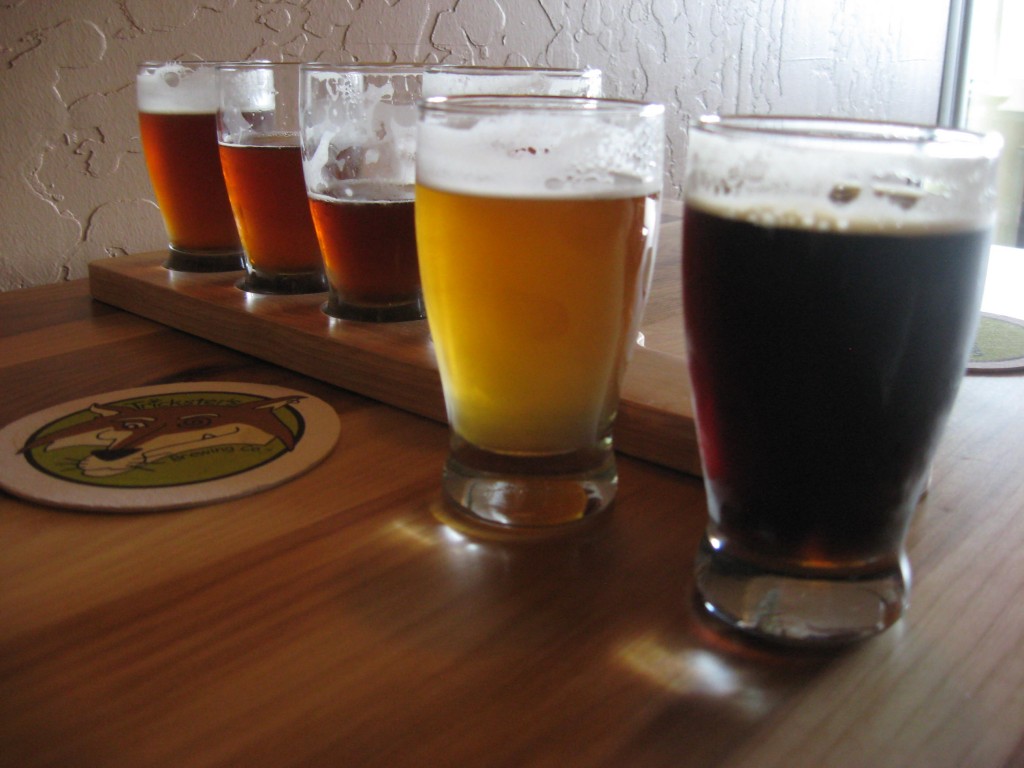
Everyone likes to leave their fav brewpub or small micro serving room with a grwoler of their fav beer, right? Well eat your hearts out, Montana quaffers: Christian Claeys won The Growler Tree… a tree with growlers from most of Montana’s brewpubs planted on the tree’s limb like shelves at the Myrna Theater in Helena, Montana. Now he gets to travel around and fill those growlers.

One unfortunate note: no where could the writer find what the fund raiser was for. One would think this might be important.

If only those of us without kids could replace our Christmas trees and Santa delivered…

Word of warning: best not try to fill and personally empty them all in one day, Christian: this is an experience best savored over time!
Another Hop Myth

Written by Martyn Cornell for Zythophile.wordpress.com

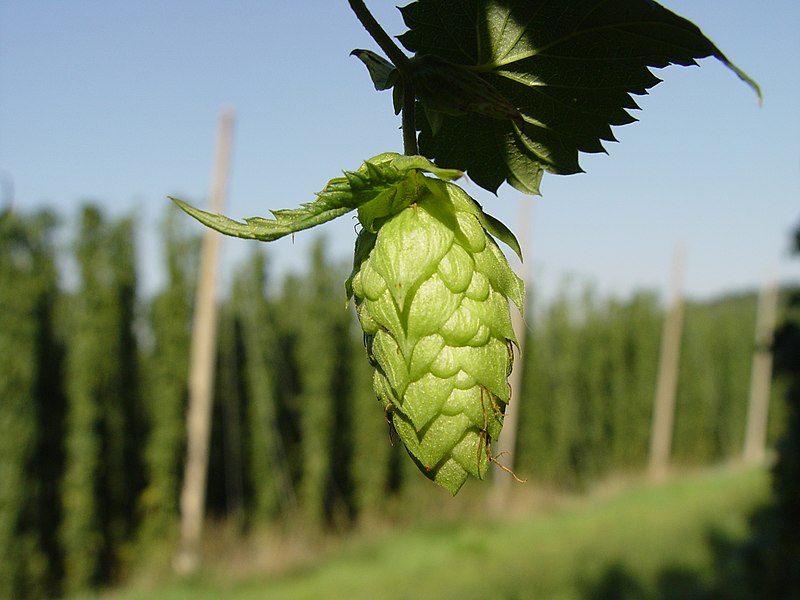
No they weren’t, and nor were there ever any petitions against hops to Parliament, nor were any general bans on brewers using hops made by Henry VIII, Parliament, the mayors and corporations of Coventry or Norwich, or anybody else.

What did happen was that at different times and in different places between approximately 1440 and 1540 attempts were made to maintain the distinction between (unhopped) ale, the only malted cereal drink made in England before the last quarter of the 14th century, and beer, the hopped malted cereal drink brought into this country by immigrants from the Low Countries and Germany. Various authorities thus forbad the ale brewers – who remained an entirely separate group of men and women from the beer brewers until at least the reign of James I in the 17th century – from putting hops into their ale. Beer brewers, however, were allowed to hop away.
Continue reading “Another Hop Myth”

The Technical Edge: A Complete Guide to Cleaning and Sanitation

Written by John Palmer

Beer has been brewed for thousands of years and the majority of this brewing was done before anyone knew about germs or sanitation. Sometimes the beer was good and sometimes it wasn’t. Over time, brewers learned which practices seemed to make good beer, and these practices became ritual. A case in point is the historic Norwegian beer totems r used in the Middle Ages. Michael Jackson reports that these sticks were passed down from generation to generation and used to stir the developing beer. The totems harbored yeast (and bacteria) of previous batches. Reusing the totems inoculated each new batch with these yeast and bacteria. Maintaining this “house yeast” was the basis for a family’s brewing success. The totems were very important and were treated carefully to preserve their power for turning wort into beer.

Late in the 1860s, Louis Pasteur discovered yeast as the cause of fermentation. At about the same time he discovered that bacteria and “wild” yeasts caused the spoilage of beer ( 1). From Pasteur’s work, it was recognized that using large amounts of healthy yeast could overcome any small amounts of bacteria present and help reduce the risk of spoilage of the final product. Once the effects of yeast and bacteria were identified. measures could be taken to control them in brewing. Unfortunately problems with beer infections persist today, particularly during the summer months when the air is teeming with bacteria and wild yeast. Only by maintaining vigilance over our sanitation techniques can we be assured of successful batches.
Continue reading “The Technical Edge: A Complete Guide to Cleaning and Sanitation”

House Passes Beer Resolution

Written by Patrick Gavin for Politico.com

While most of Washington was focused on Tuesday’s election results, the House was busy doing something else: passing a resolution about beer.

House Resolution 1297, sponsored by Rep. Betsy Markey, supports “the goals and ideals of American Craft Beer Week.”

“We’ve got quite a number of microbreweries and entrepreneurs that are creating jobs, and we wanted to celebrate that this is a craft,” Markey told POLITICO. “I think beer has been a tradition since this country was founded,” said Markey. “We wanted to celebrate entrepreneurship — and good beer!”

Markey is obviously partial to brews from her home state of Colorado, but she won’t claim a favorite.

“You can’t just have one,” said Markey. “It really depends on what mood you’re in. Sometimes, I like a light beer — I might want a Skinny Dip — or otherwise prefer a heavier brew.”

The real question is: Why would anyone vote against this?

“It does seem like a no brainer,” said Markey.

Aromas? Yes. But Can the Willamette Valley Handle Dual Purpose Heavies Like Centennial, Horizon and Chinook?

Written by RGW of the Indie Hopsters at inhoppursuit.blogspot.com

If the Willamette Valley is renown for its aroma hops and Yakima Valley for it’s high alpha, where do “dual purpose” hops fit in? Since most mid to high alpha hops hail from Yakima, does that mean they don’t or wouldn’t thrive in Oregon?

First, a bit of background.

“Dual purpose” is a term of art that first emerged in the mid 1990s, about the time that our hopmeister Dr. Al was hanging up his cover-alls and putting away his clipboard. “We never used that term,” recalled Al.

All Purpose Cluster

“Actually, when I first came to the industry in 1965, brewers talked about three major categories of hops. Aromas, high alphas, and general kettle hops. The latter referred mostly to Cluster hops, such as Early Cluster, California Cluster, Yakima Cluster, and Late Cluster. All of these were virtually indistinguishable by quality characteristics. They differed only by their maturity and harvest dates. California Cluster seemed to rank above the others for reasons that I never quite understood.“
Continue reading “Aromas? Yes. But Can the Willamette Valley Handle Dual Purpose Heavies Like Centennial, Horizon and Chinook?”

From the Bottle Collection

Without intent, I have collected well over 1,000 beer bottles since the early 70s. When something finally had to be done about the cheap paneling in this old modular, I had a choice. Tear down the walls while, oh, so carefully, replacing the often rotted 1X3s. Or: cover them with… The Bottle Collection.

Since I first started writing for Professor Good Ales I have frequently provided one column called “From the Bottle Collection.” I thought I’d share some pictures of the collection I have: over 2,000 bottles. This is, by no means, the full collection…


Continue reading “From the Bottle Collection”